
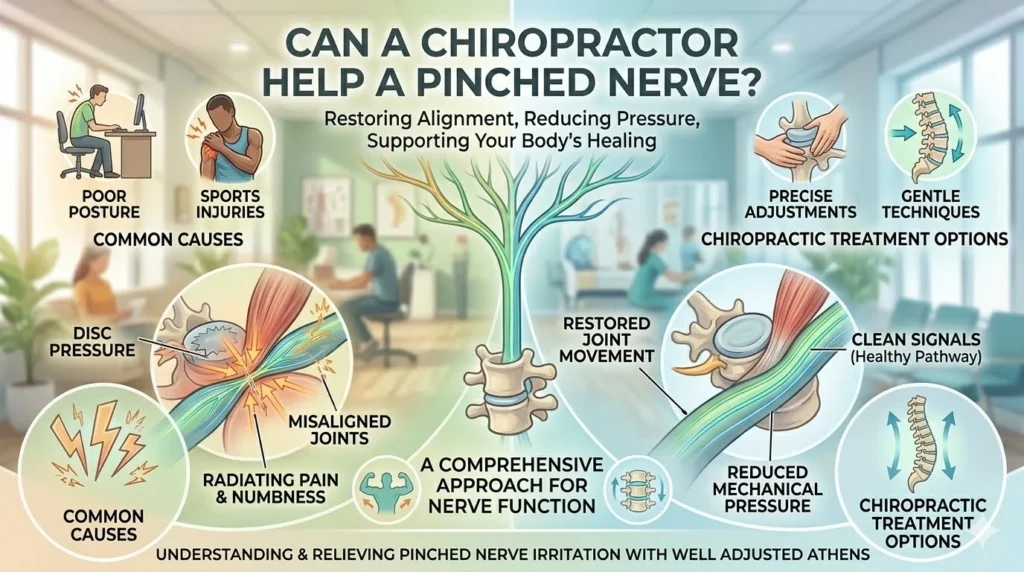
A pinched nerve can cause sharp pain, tingling, numbness, or weakness that interferes with everyday activities. Many people experience these symptoms in the neck, back, shoulders, or arms and may wonder if chiropractic care can help.
When a nerve becomes compressed due to joint dysfunction, disc pressure, or inflammation, it can disrupt the communication between the brain and body. Fortunately, professional chiropractic care in Athens focuses on restoring spinal alignment and reducing pressure on irritated nerves.
In this guide, we’ll explain the causes, symptoms, and treatment options for pinched nerves — and how chiropractic care may help relieve the underlying problem.
What Is a Pinched Nerve?
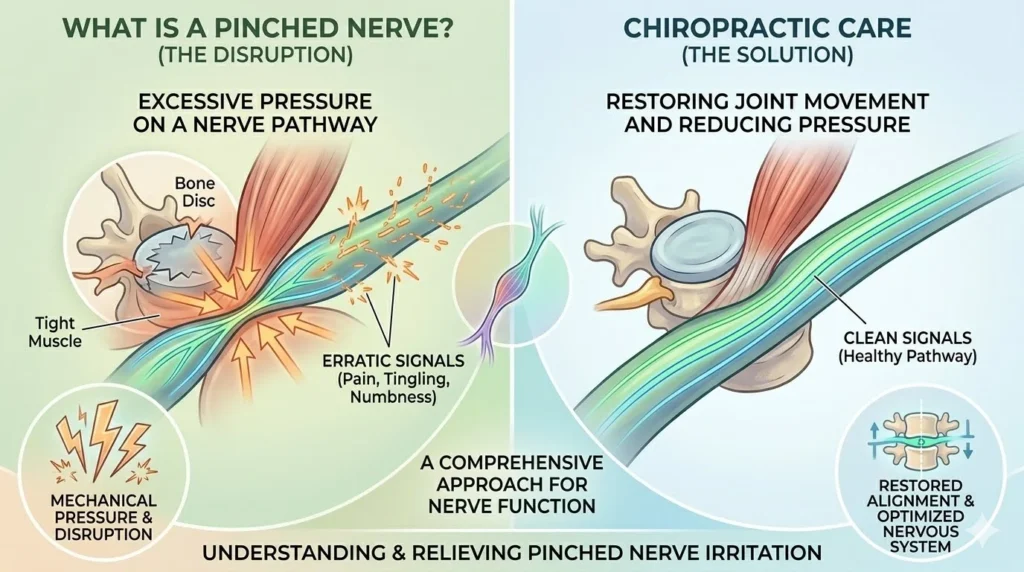
A pinched nerve occurs when surrounding tissues, such as bones, muscles, or discs, place excessive pressure on a nerve. This compression disrupts normal nerve signaling and can lead to pain, numbness, or tingling sensations along the affected nerve pathway.
Pinched nerves commonly develop in areas of the spine that experience frequent stress, including the neck (cervical spine) and lower back (lumbar spine). When spinal joints lose proper alignment or mobility, nearby nerves can become irritated. Chiropractic care focuses on restoring joint movement and reducing mechanical pressure so the nervous system can function properly again.
Common Causes of a Pinched Nerve
Several factors can contribute to nerve compression. One of the most common causes is spinal misalignment, where joints lose their normal position and restrict nerve pathways. Herniated or bulging discs may also press against nearby nerves, especially in the lower back or neck.
Poor posture from prolonged sitting or phone use can gradually increase stress on the spine, while injuries from sports or accidents may create inflammation that compresses nerves. Chiropractors often evaluate posture, joint mobility, and spinal alignment to identify the root cause of nerve irritation before recommending treatment.
Symptoms of a Pinched Nerve
Symptoms vary depending on the nerve involved but often include radiating pain, tingling, or numbness that travels into the arms or legs. Some people experience a burning or electric sensation, while others notice weakness in the affected muscles.
For example, a pinched nerve in the neck may cause discomfort that spreads into the shoulder or arm, while nerve compression in the lower back can lead to pain that travels down the leg. If these symptoms persist or worsen over time, a professional evaluation can help determine whether spinal dysfunction is contributing to the problem.
Will Chiropractic Care Help a Pinched Nerve?
Many patients ask, “Will chiropractic help a pinched nerve?” In many cases, chiropractic adjustments can reduce nerve pressure by improving the alignment and movement of spinal joints. When vertebrae move properly, surrounding muscles relax and inflammation decreases, which may relieve stress on the nerve.
Through personalized care plans, chiropractors focus on addressing the mechanical cause rather than simply masking symptoms. At Well Adjusted Athens, patients seeking chiropractic care can receive evaluations that identify spinal restrictions and develop treatment strategies aimed at restoring natural movement and reducing nerve irritation.
Chiropractor for Pinched Nerve in the Back
Pinched nerves in the lower back often occur when spinal discs bulge or when joints lose mobility due to poor posture, heavy lifting, or repetitive strain. These conditions can compress nerves that travel into the hips and legs, sometimes leading to radiating pain similar to sciatica.
Chiropractic care focuses on restoring motion to restricted spinal segments. Gentle adjustments may help reduce pressure within the lumbar spine and improve the body’s ability to heal. Many patients also benefit from posture education and mobility exercises that support spinal stability and prevent recurring irritation.
Chiropractor for Pinched Nerve in the Neck
Nerve compression in the cervical spine frequently results from poor posture, prolonged screen use, or injuries such as whiplash. Patients may experience neck stiffness, shoulder tension, headaches, or tingling in the arms and hands.
Chiropractors use precise techniques to improve mobility within the cervical spine while reducing stress on surrounding tissues. When combined with posture correction strategies, chiropractic adjustments can help restore balance to the neck and upper back. Patients experiencing neck-related symptoms may also benefit from spinal adjustments that target restricted joints and support overall nervous system function.
Pinched Nerve and Massage: What’s the Difference?
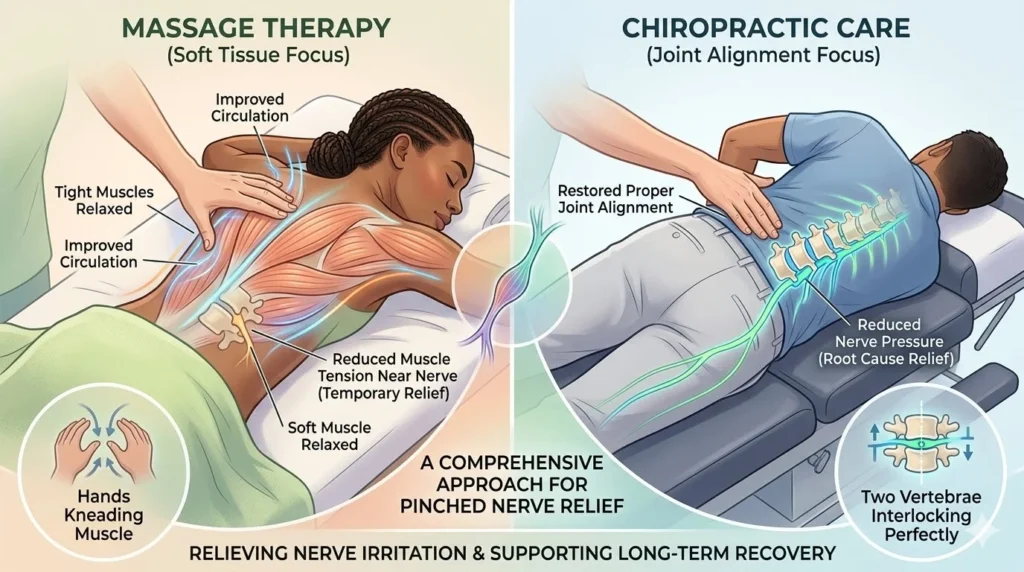
Massage therapy and chiropractic care both aim to reduce discomfort, but they address different aspects of the problem. Massage primarily focuses on relaxing tight muscles and improving circulation in soft tissues. This can temporarily reduce tension around an irritated nerve.
Chiropractic care, on the other hand, focuses on restoring proper joint alignment and movement within the spine. When joints move correctly, nerve pathways experience less pressure. In many cases, combining soft tissue therapy with chiropractic adjustments provides a more comprehensive approach to relieving nerve irritation and supporting long-term recovery.
When Should You See a Chiropractor for a Pinched Nerve?
If symptoms persist for more than a few days, worsen with movement, or include numbness and tingling, it may be time to seek professional evaluation. Early intervention often prevents minor nerve irritation from progressing into chronic pain conditions.
Chiropractors evaluate spinal mobility, posture, and nerve function to determine whether conservative care may help relieve pressure on the affected nerve. In Athens, many patients choose chiropractic care as a natural option for improving mobility and addressing musculoskeletal issues before symptoms become more severe.
Pinched Nerve Treatment Options in Athens, GA
Treatment for a pinched nerve typically depends on the underlying cause. Chiropractic care may include gentle spinal adjustments, posture correction strategies, and mobility exercises designed to reduce nerve irritation. These approaches focus on restoring proper joint movement and supporting the body’s natural healing processes.
Some patients may also benefit from complementary therapies that address muscular tension or joint restrictions in areas beyond the spine. For example, extremity adjustments can help improve joint balance in the shoulders, hips, and knees, which may reduce strain on the spine and surrounding nerves.
Conclusion
A pinched nerve can be painful and frustrating, especially when symptoms interfere with everyday activities. Understanding the causes and recognizing early warning signs can help you seek the right care before the condition worsens.
Chiropractic care focuses on identifying the underlying mechanical causes of nerve irritation and restoring proper movement within the spine. By improving alignment and reducing pressure on nerves, many patients experience relief and improved mobility.
If you’re experiencing symptoms of a pinched nerve in Athens, GA, the team at Well Adjusted Athens can provide a personalized evaluation and recommend treatment options that support long-term spinal health.
FAQ
Can a chiropractor fix a pinched nerve?
Chiropractors cannot “fix” nerves directly, but they can address spinal misalignment or joint restrictions that place pressure on nerves. By restoring normal joint motion and reducing inflammation around the affected area, chiropractic adjustments may relieve nerve compression and improve symptoms.
Will chiropractic adjustments help a pinched nerve?
In many cases, chiropractic adjustments can help reduce pressure on nerves caused by restricted joints or spinal misalignment. When vertebrae move more freely, surrounding muscles relax and nerve irritation may decrease, allowing the body to recover more effectively.
Is massage good for a pinched nerve?
Massage therapy can help relax tight muscles and improve circulation around irritated tissues. However, massage primarily addresses muscle tension rather than spinal alignment. Combining massage with chiropractic care may provide more comprehensive relief for nerve-related discomfort.
How long does it take for a pinched nerve to heal?
Recovery time varies depending on the cause and severity of the nerve compression. Some mild cases improve within a few weeks, while more complex conditions may take longer. Early evaluation and appropriate treatment can help speed recovery and reduce the risk of chronic symptoms.
Should I see a chiropractor for a pinched nerve in my back?
If you experience persistent pain, numbness, or tingling in your back or limbs, a chiropractor can evaluate whether spinal dysfunction may be contributing to nerve irritation. Chiropractic care focuses on restoring proper joint movement and may help relieve pressure affecting nearby nerves.