
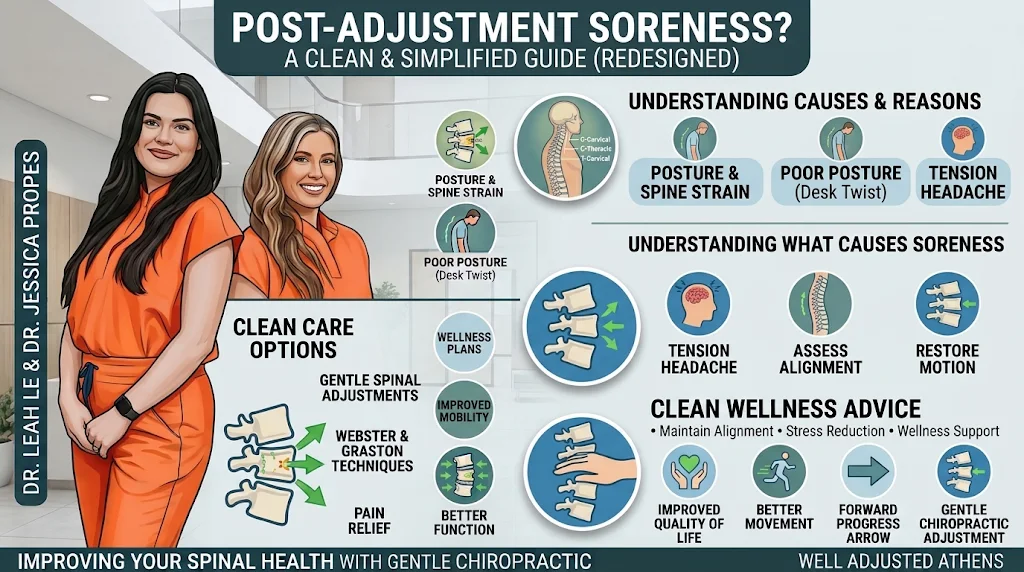
You walked out of your appointment feeling looser, then woke up the next morning a little achy. Is something wrong?
In most cases, no. Mild soreness after an adjustment is common, and it usually fades quickly. Still, it helps to know what a normal response looks like, and which symptoms mean you should get checked. Here is what to expect.
Why You Might Feel Sore After an Adjustment
An adjustment moves joints that may have been restricted for weeks, months, or even years. Your muscles, ligaments, and surrounding tissues are suddenly being asked to work in a new way.
Think of how you feel after starting a new workout routine. You haven’t been injured. Your body is simply adapting to movement it isn’t used to. The same idea applies here.
Common reasons for mild soreness include:
- Muscles adjusting to new alignment. Muscles that were tight or guarding an area need time to relax and re-balance.
- Using muscles differently. Better joint movement can bring muscles into play that had been underused.
- Existing inflammation. If the area was already irritated, it may feel tender for a short time as it settles.
- Tension release. Tight tissue letting go can leave the area feeling tired or tender.
What Normal Soreness Feels Like
Normal post-adjustment soreness is typically:
- A mild, dull ache or feeling of tightness, similar to post-workout muscle soreness
- Located in or near the area that was adjusted
- Most noticeable within the first several hours to a day after your visit
- Improving steadily, not getting worse
- Sometimes paired with mild tiredness or a feeling of looseness
Some people also feel a little fatigued or lightly headachy after a visit. These effects are generally mild and short-lived.
How Long Does Soreness Last?
For most people, soreness clears up within 24 to 48 hours. It tends to be more noticeable after the first few visits, when your body is getting used to care, and often becomes less of an issue as treatment continues.
If your discomfort is lasting longer than a couple of days, or it is getting stronger instead of easing, let your chiropractor know. They can adjust your care plan, including technique, intensity, and spacing between visits.
How to Ease Soreness After an Adjustment
A few simple habits can help you feel better faster:
- Drink water. Staying hydrated supports muscle recovery.
- Keep moving gently. Light walking and easy stretching usually feel better than staying still all day.
- Use heat or ice. Heat can relax tight muscles, while ice can calm a tender spot. Use 15 to 20 minutes at a time with a cloth between the pack and your skin.
- Rest when you need to. Take it easy for the rest of the day if you feel tired, and skip intense workouts if the area is sore.
- Watch your posture. Long stretches of slouching can irritate the area again. Our guide on how poor posture causes neck and back pain explains why.
- Sleep well. Your sleeping position matters more than you might think. See our tips on the best sleeping positions to avoid neck and back pain.
Signs That Aren’t Normal: When to Call Your Chiropractor or Doctor
Mild soreness is expected. These symptoms are not. Contact your chiropractor or doctor promptly if you notice:
- Pain that is severe, sharp, or getting worse instead of better
- Soreness that lasts longer than a few days without improving
- New numbness, tingling, or weakness in your arms or legs
- Dizziness, trouble with balance, or vision changes that don’t pass quickly
- Difficulty speaking, facial drooping, or confusion
- A severe, sudden headache unlike any you’ve had before
- Loss of bladder or bowel control
Seek emergency care right away if you have sudden weakness, facial drooping, trouble speaking, severe sudden headache, loss of bladder or bowel control, or any symptom that feels like an emergency. Do not wait for a callback.
These symptoms are uncommon, but they are important to take seriously. Always tell your chiropractor about your full health history and any new symptoms so your care stays safe and appropriate for you.
Can You Reduce Soreness Before Your Next Visit?
Yes. A little preparation can make a difference:
- Tell your chiropractor how you felt last time. Adjusting pressure and technique can be modified.
- Stay hydrated and well rested before and after your visit.
- Stick to your care plan. Spacing visits too far apart can make each adjustment feel more intense, since the body has to readjust each time. If you’re unsure about timing, read our article on how often you should see a chiropractor.
- Speak up during the visit. If something feels uncomfortable, say so. A good chiropractor wants that feedback.
If you’re new to care, our guide to your first chiropractic visit in Athens, GA walks through what to expect from start to finish.
Is Soreness a Sign the Adjustment Worked?
Not necessarily. Some people feel sore after a great adjustment and others feel nothing but relief. Soreness is not a measure of success, and you don’t need to feel sore for the care to be working. What matters is how you feel over time: better movement, less pain, and improved daily comfort.
If you want a deeper look at what actually happens during a visit, read what a chiropractic adjustment is and its benefits.
Frequently Asked Questions
Is it normal to feel worse before feeling better?
Some people notice mild soreness or tiredness after early visits before the benefits settle in. This should be mild and short-lived. If it is strong or prolonged, let your chiropractor know.
Should I take pain medication for post-adjustment soreness?
Mild soreness often eases with water, light movement, and heat or ice. If you are considering medication, check with your doctor or pharmacist first, since the right choice depends on your health history.
Can I exercise after an adjustment?
Light activity like walking is usually fine. It’s smart to avoid intense workouts the same day if you feel sore, and your chiropractor can give guidance based on your situation.
Why am I more sore after my first visit than later ones?
Your body is adjusting to a new way of moving. Many people find that soreness lessens as care continues.
Does everyone get sore after an adjustment?
No. Many people feel no soreness at all, and some feel immediate relief.
Final Thoughts
A little soreness after an adjustment is normal for many people and usually passes within a day or two. Staying hydrated, moving gently, and using heat or ice can help. What matters most is knowing the difference between mild, temporary soreness and symptoms that need attention.
At Well Adjusted Athens, we want you to feel informed and comfortable at every step. If you have questions about how you’re feeling after a visit, our team is here to help.
Ready to feel better? Book your appointment at Well Adjusted Athens today.