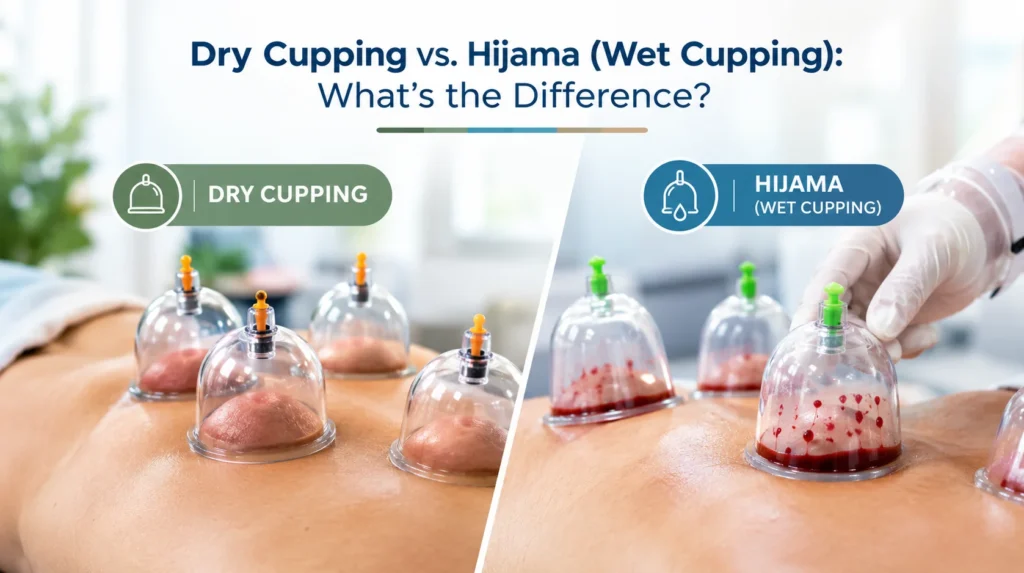
If you’ve searched for cupping therapy, you’ve probably noticed two terms that seem to describe the same thing: dry cupping and hijama (also called wet cupping). They’re related, and both use suction cups on the skin, but they’re different techniques with different methods, sensations, and safety considerations.
Here’s a clear breakdown to help you understand which one may fit your needs.
What Is Cupping Therapy?
Cupping is a traditional therapy that places cups on the skin and creates suction, lifting the skin and underlying tissue. It has been practiced for centuries in many cultures, and today it’s commonly used to ease muscle tension, support circulation, and aid recovery from physical strain.
The suction gently draws blood flow to the area and can help loosen tight muscle and fascia (the connective tissue surrounding your muscles). The difference between dry and wet cupping comes down to what happens after the suction is applied.
What Is Dry Cupping?
Dry cupping is the most common form of cupping, and it doesn’t break the skin at all. Cups are placed on the skin and suction is created using either a pump or heat. The cups may stay in place for several minutes, or be moved across the skin in a gliding motion, which is often called myofascial or “moving” cupping.
Dry cupping is commonly used for:
- Muscle tension and tightness in the back, neck, and shoulders
- Post-workout or athletic recovery
- Stiffness and restricted mobility
- Stress-related muscle tension
What it feels like: Most people describe a firm pulling or tugging sensation rather than pain. It’s often compared to a deep-tissue massage in reverse, with the tissue lifted instead of pressed.
What to expect afterward: Round, reddish or purplish marks are common where the cups were placed. They aren’t bruises from impact. They’re caused by blood being drawn toward the surface, and they typically fade within several days.
What Is Hijama (Wet Cupping)?
Hijama is a traditional form of wet cupping with deep roots in many cultures, including Islamic tradition, where it is widely practiced. It begins the same way as dry cupping, with suction applied to the skin. After the initial suction, the cups are removed and a trained practitioner makes very small, superficial incisions on the skin. Suction is then applied a second time, which draws out a small amount of blood.
Because hijama involves breaking the skin, it carries additional considerations around hygiene, technique, and who should or shouldn’t receive it.
People pursue hijama for:
- Muscle pain and tension
- Headaches and tension-related complaints
- Traditional wellness and cultural or religious reasons
What to expect afterward: The small incisions are treated with care and need to be kept clean while they heal. Mild soreness and temporary marks are common.
Dry Cupping vs. Hijama: Side-by-Side
| Dry Cupping | Hijama (Wet Cupping) | |
| Breaks the skin? | No | Yes (small, superficial incisions) |
| Suction applied | Once | Twice (before and after incisions) |
| Blood drawn? | No | A small amount |
| Typical sensation | Pulling or tugging | Pulling, plus a light scratching sensation |
| Aftercare | Minimal; marks fade in days | Keep incision sites clean while they heal |
| Best known for | Muscle tension and recovery | Traditional and cultural wellness practice |
| Skin-infection risk | Very low | Higher if not done with sterile technique |
Which One Is Right for You?
Dry cupping is often the better starting point if:
- You’re new to cupping
- Your main goal is relieving muscle tightness or supporting recovery
- You prefer a non-invasive approach
Hijama may be a fit if:
- You’re specifically seeking this traditional practice
- You’re comfortable with a technique that involves small skin incisions
- You’re working with a practitioner trained in proper, sterile hijama technique
Either way, a short conversation about your health history and goals helps determine which approach makes sense for you.
Safety Considerations for Both Types
Cupping is generally considered low-risk when performed by a trained practitioner, but it isn’t right for everyone. Let your practitioner know before treatment if you:
- Take blood-thinning medication or have a bleeding disorder
- Are pregnant
- Have sensitive skin, a skin infection, sunburn, or open wounds in the treatment area
- Have a chronic medical condition or are recovering from surgery
For hijama in particular, sterile, single-use equipment and proper technique matter. Always ask any provider how they handle infection control before booking.
What Does the Research Say?
Honesty matters here: the research on cupping is still developing. Some studies suggest it may help with certain types of musculoskeletal pain, but study quality varies, and results differ from person to person. Many patients report that cupping helps them feel looser and more relaxed, and it’s often used alongside other approaches rather than on its own.
How Cupping Fits With Chiropractic Care
Cupping works well as a complement to chiropractic care. While adjustments address joint alignment and motion, cupping can help release the tight muscle and fascia around those joints. Many patients combine it with other soft tissue work as well, as we cover in our guide to Graston and cupping with chiropractic adjustments.
You can learn more about the approach we use on our cupping therapy page.
Frequently Asked Questions
Does cupping hurt? Most people feel pulling or pressure, not sharp pain. Intensity can be adjusted to your comfort level.
How long do cupping marks last? Typically several days, though it can take up to a week or two depending on your skin and how much suction was used.
How often can you get cupping? This depends on your goals and how your body responds. Your practitioner can recommend a schedule based on your needs.
Is hijama the same as wet cupping? Yes. “Hijama” is the traditional term for wet cupping.
Can I combine cupping with a chiropractic adjustment? Yes. The two are commonly paired, since cupping can ease surrounding muscle tension while adjustments address joint motion.
Ready to Try Cupping in Athens?
If you’re curious about cupping and want to know whether it fits your goals, we’re happy to walk you through your options and answer your questions before you commit to anything.
Schedule a consultation with Well Adjusted Athens and let our team help you find the right approach for your body.
Book Appointment | Call us: 706-202-3847