
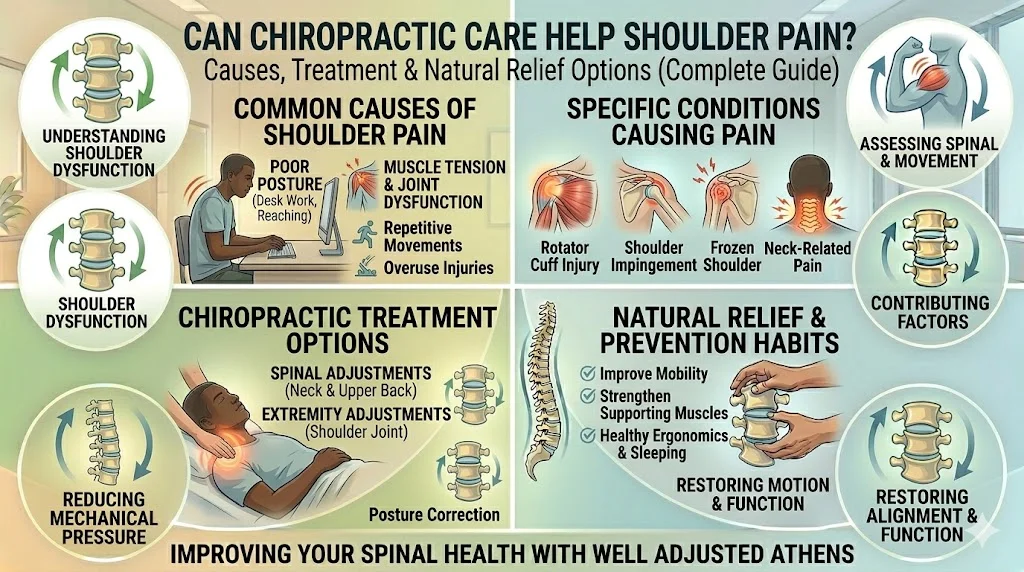
Shoulder pain can make everyday activities surprisingly difficult. Simple tasks such as reaching overhead, lifting groceries, exercising, driving, or even sleeping comfortably can become painful when the shoulder is not functioning properly.
While many people assume shoulder pain is caused solely by a shoulder injury, the problem can sometimes originate from nearby joints, muscles, posture issues, or even the neck. This is one reason many individuals seek chiropractic care as part of a conservative, non-invasive approach to shoulder pain relief.
At Well Adjusted Athens, patients often visit our office with shoulder pain caused by overuse, poor posture, sports injuries, repetitive movements, or underlying joint dysfunction. Understanding the cause is the first step toward finding lasting relief.
Understanding Shoulder Pain
The shoulder is one of the most mobile joints in the body. It allows movement in multiple directions, making it essential for daily activities. However, this mobility also makes the shoulder vulnerable to strain, instability, and injury. The shoulder is made up of:
- Bones
- Muscles
- Tendons
- Ligaments
- Joints
- Nerves
When any of these structures become irritated or dysfunctional, pain and limited mobility can occur.
Common Causes of Shoulder Pain
Shoulder pain can develop for many different reasons.
1. Poor Posture
One of the most overlooked causes of shoulder pain is poor posture. Sitting at a desk for long periods, looking down at phones, and rounded shoulders can place excessive stress on the upper back, neck, and shoulder joints.
Over time, this imbalance may lead to muscle tension and reduced shoulder mobility.
Related reading: How Poor Posture Causes Neck & Back Pain
2. Rotator Cuff Injuries
The rotator cuff is a group of muscles and tendons that help stabilize the shoulder. Repetitive overhead movements, sports activities, and lifting injuries may irritate these tissues and cause pain. Common symptoms include:
- Pain when lifting the arm
- Weakness
- Reduced range of motion
- Difficulty sleeping on the affected side
3. Shoulder Impingement
Shoulder impingement occurs when tendons become compressed during movement. This can cause pain when reaching overhead or performing repetitive activities. Many patients describe:
- Sharp pain when raising the arm
- Clicking sensations
- Weakness
- Reduced mobility
4. Frozen Shoulder
Frozen shoulder, also known as adhesive capsulitis, causes stiffness and progressive loss of shoulder motion. Symptoms often develop gradually and may include:
- Pain with movement
- Limited mobility
- Difficulty reaching behind the back
- Shoulder stiffness
5. Neck-Related Shoulder Pain
Sometimes the shoulder itself is not the primary problem. Conditions affecting the neck may cause pain that radiates into the shoulder and upper arm. Signs this may be occurring include:
- Neck stiffness
- Headaches
- Numbness or tingling
- Pain traveling down the arm
Related reading: Common Causes of Neck Pain & Safe Chiropractic Solutions
Signs You Should Seek Professional Evaluation
You should consider professional evaluation if you experience:
- Persistent shoulder pain
- Limited range of motion
- Weakness in the arm
- Pain that interrupts sleep
- Difficulty lifting objects
- Numbness or tingling
- Pain lasting more than a few weeks
Early assessment often helps prevent minor issues from becoming long-term problems.
Can Chiropractic Care Help Shoulder Pain?
Depending on the cause of the problem, chiropractic care may help improve movement, reduce joint restrictions, and address contributing factors that affect shoulder function.
Many shoulder issues involve more than just the shoulder joint itself. Problems in the neck, upper back, posture, and surrounding muscles can all influence shoulder mechanics. Patients often seek professional chiropractic care to help:
- Improve mobility
- Reduce joint dysfunction
- Address posture-related stress
- Support recovery
- Improve overall movement patterns
How Chiropractic Care Addresses Shoulder Pain
1. Shoulder Joint Assessment
A chiropractor evaluates how the shoulder moves and identifies areas of restriction or dysfunction that may contribute to pain.
This helps determine whether the issue originates in the shoulder, neck, upper back, or surrounding tissues.
2. Extremity Adjustments
In some cases, extremity adjustments may be used to improve shoulder joint movement and function. Proper joint mobility is important for comfortable, pain-free movement.
3. Spinal Adjustments
The neck and upper back play a significant role in shoulder function.
Gentle spinal adjustments may help improve mobility and reduce restrictions that affect surrounding muscles and nerves.
4. Posture Correction Strategies
Poor posture is a common contributor to shoulder discomfort. Your chiropractor may recommend:
- Ergonomic changes
- Stretching exercises
- Strengthening routines
- Daily movement modifications
These changes help reduce strain and support long-term improvement.
Related reading: Best Sleeping Positions for Neck and Back Pain
How to Prevent Future Shoulder Problems
Preventive care often plays a major role in maintaining shoulder health. Helpful habits include:
- Maintaining proper posture
- Staying physically active
- Strengthening shoulder-supporting muscles
- Using proper lifting techniques
- Addressing pain early before it worsens
Consistent attention to movement and posture can help reduce the risk of recurring issues.
Why Patients Choose Well Adjusted Athens
At Well Adjusted Athens, our team focuses on identifying the underlying cause of shoulder pain rather than simply addressing symptoms. Patients choose our office because we provide:
- Personalized treatment plans
- Thorough evaluations
- Gentle chiropractic techniques
- Family-focused care
- Education for long-term wellness
Our goal is to help patients improve mobility, restore function, and return to the activities they enjoy.
Ready to Get Started?
If you found this article helpful, take the next step today. Our team is here to help you with expert guidance and fast support.